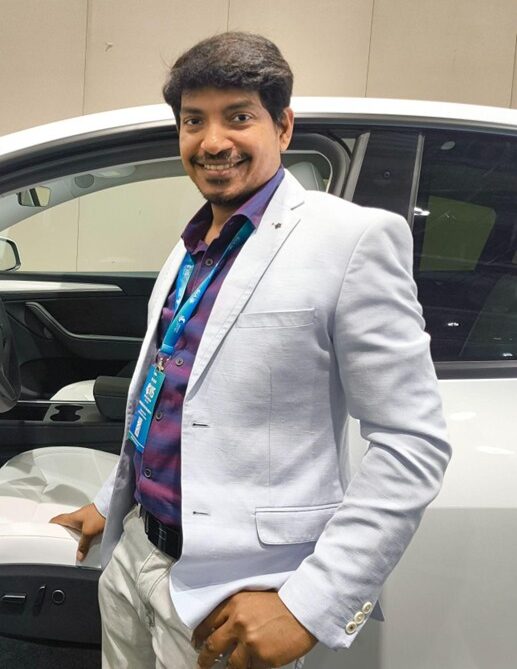
Following green mobility promotion by the Indian government, the two wheeler segment has gained steady growth in the past decade. With number of ev makers entering into the market, now the customers are choosy to find their new battery driven vehicle with latest technologies. Sensing the trend in the segment, Bangalore-based iGo Wise Mobility is concentrating more on technology to stand out from the crowd. In an email interaction, Sravan K Appana CEO of iGowise Mobility details about the new technologies and other offerings from their company with Jaishankar Jayaramiah, Editor, Automotive Lead.
India’s EV market is crowded but still evolving—what gap did you see that convinced you iGo Wise Mobility needed to exist?
At a surface level, India’s EV market appears crowded, but when you break it down by real user needs, it is far from saturated. Most products today are built with a one-size-fits-all approach, largely targeting young urban male commuters or delivery fleets. However, mobility in India is far more diverse.

We saw a clear gap in solutions designed for specific, often overlooked users—a woman commuter seeking safety and ease of use, a parent navigating school runs, a senior citizen needing stability, a rural farmer requiring utility, or a homecare professional covering multiple stops in a day. These are not fringe segments; they represent a large and underserved base.
iGo Wise Mobility was built to address exactly this gap creating purpose-driven mobility solutions that prioritize real-world usability over generic scale.
Also Read : The Climate Pledge launches JOULE project to drive electric vehicle adoption in India
Many EV startups focus on scale first, differentiation later. You seem to be doing the opposite—what’s your long-term play here?
In software, you can scale first and iterate later. In hardware and deeptech, that approach simply doesn’t work. If the foundation is weak, scaling only amplifies the problem.
Our long-term play is to build a deeply engineered, innovation-led company where R&D, IP, engineering and product reliability form the core. This requires patience, because meaningful innovation—especially in a market like India—does not happen overnight.
We have consciously avoided the import-and-assemble route because it limits long-term differentiation. Instead, we are investing in building products that are designed for Indian conditions, with durability, reliability, and after-sales service engineered into the system from day one. For us, scale is an outcome—not the starting point.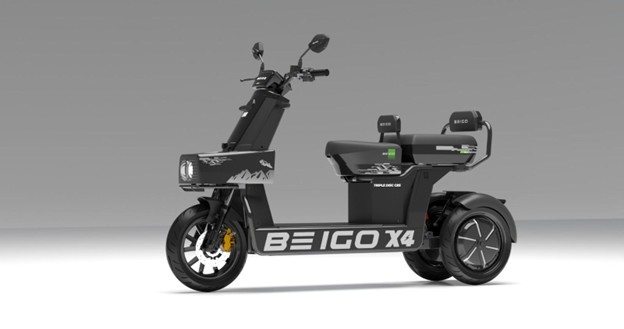
Your electric trike platform stands out in a 2W-heavy market—what problem does it solve that traditional EVs don’t?
Traditional two-wheelers in India come with inherent limitations—especially when it comes to safety, comfort, and accessibility. Our electric trike platform is designed to fundamentally rethink these aspects. From a safety standpoint, it offers significantly higher road grip and stability, which is critical for navigating potholes, uneven terrain, and unpredictable traffic conditions. The anti-topple mechanism allows riders to lean into turns confidently without the fear of losing balance.
In terms of comfort, the design reduces stress on the knees and back—an important factor given the realities of Indian roads. Most importantly, it improves accessibility. It is designed so that multiple members of a household—across age groups and genders—can use the same vehicle with ease. This makes it not just a product, but a shared mobility solution for families.
What are the biggest challenges you’ve had to solve while building your vehicles, especially for Indian road conditions?
Interestingly, engineering and design are not the hardest parts. The real challenge lies in building a reliable and responsive supply chain.
In India, most vendors are structured around large-scale production and are not equipped to support early-stage R&D with small quantities or rapid iterations. This makes prototyping and testing significantly harder. At the same time, Indian road conditions demand a very high level of robustness. Vehicles must be designed to withstand poor infrastructure, extreme usage patterns, and diverse environmental conditions.
Balancing innovation with manufacturability and supply chain constraints has been one of the toughest—but also most defining—parts of our journey.
Is your core customer today B2B fleets, last-mile delivery, or individual users—and how do you see that evolving?
We made a conscious decision to not start with B2B fleets. That segment is highly crowded, largely driven by cost competition, and dominated by low-margin, imported solutions. However, with increasing regulatory scrutiny, the landscape is beginning to shift, making it harder to sustain purely price-driven models.
Our focus has been on building for individual users and niche segments where product value, reliability, and user experience matter more than just upfront cost. Over time, as the ecosystem matures, we see opportunities to selectively expand into B2B—but with differentiated, high-value offerings rather than commoditized products.
Affordability is still the biggest barrier to EV adoption. How are you tackling cost without compromising performance?
Affordability is often misunderstood as low pricing. In reality, affordability is about access and value. For example, for a farmer, a vehicle becomes affordable if it enables additional income generation beyond just fuel savings. For a senior citizen, affordability is about reducing the risk and cost associated with accidents.
We focus on ensuring that the value delivered by the product exceeds its cost over time. Additionally, access to financing plays a critical role. Monthly or usage-based payment models can significantly improve affordability, even if the upfront price remains unchanged.
So, our approach is not to make cheaper products—but to make products that are meaningfully more valuable and accessible.
Government incentives like FAME and PLI have boosted the EV sector—but what are the ground realities that policymakers still don’t fully understand?
Both FAME and PLI are well-intentioned policies, but their impact depends heavily on execution. FAME, for instance, stimulated demand, but it also led to unintended consequences, including misuse by a large number of import-and-assemble players. The subsequent course correction by the government has been necessary.
On the positive side, standards like AIS-156 have significantly strengthened battery safety and are among the most robust globally. PLI, while strategically important, remains largely inaccessible to startups and MSMEs due to high entry barriers.
What the ecosystem truly needs now is stronger support for R&D, testing, validation, certifications, and regulatory approvals. Enabling innovation at the ground level will create more sustainable long-term growth than demand-side incentives alone.
With legacy OEMs and well-funded startups entering EVs aggressively, what gives you a defensible edge in the next 3–5 years?
The EV market in India is not a winner-takes-all space. Unlike platform businesses, this is a multi-segment, highly diverse market. We expect a reasonable consolidation in two-wheelers, but categories like L3 and electric three-wheelers will remain fragmented for some time. That fragmentation itself presents an opportunity to organize and build strong, differentiated offerings.
Our edge lies in how quickly we can innovate, execute, and respond to customer needs. We are focused on identifying niche segments that are too small or too complex for larger players to prioritize.
In a market of this scale, defensibility comes not from dominance, but from relevance and speed.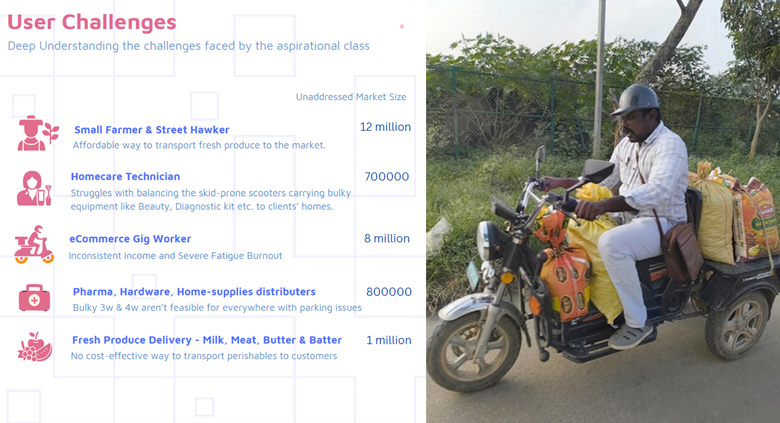
What has been the toughest moment so far in your journey was product-market fit, funding, or execution and what did it teach you?
Contrary to popular belief, product-market fit is not the hardest challenge when you are building with a clear purpose. The tougher challenges are distribution, access to financing, and after-sales service. These are the factors that truly determine adoption and long-term success.
A product may be great, but if customers cannot access financing, it remains out of reach. Similarly, without strong after-sales support, even the best product will struggle to build trust and word-of-mouth.
The biggest learning has been that building a successful mobility company is as much about ecosystem creation as it is about product innovation.
If we revisit this conversation in 5 years, what would success for iGo Wise Mobility look like and what would you have disrupted by then?
Success, for us, would go beyond building a single brand. It would mean enabling an ecosystem. We envision a future where we have helped create over 100 brands and hundreds of micro-factories, decentralizing manufacturing and making innovation more accessible.
On a global level, we aim to compete with established players in regions like Africa, South Asia, and Eastern Europe not just with products, but with our core technology and intellectual property.
Most importantly, we would like to have made a tangible impact on everyday mobility—reducing accidents caused by poor road conditions, improving safety and stability, and enabling more efficient movement in congested cities. That, ultimately, is the disruption we are aiming for not just in products, but in how mobility is experienced.