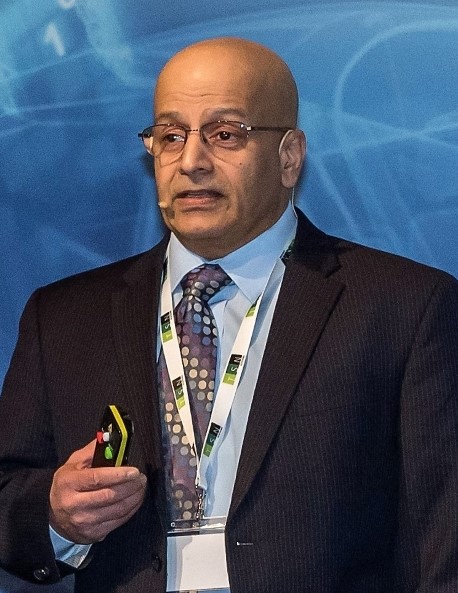
 Excelfore, a provider of in-vehicle and cloud-to-vehicle connectivity solutions is strengthening its presence in India with production deployments of its Software-Defined Vehicle (SDV) platform. The company has already gone live with Hero MotoCorp and is in advanced discussions with other OEMs too to integrate the technology across electric fleets and commercial vehicles. In an email interview, Shrikant Acharya, CTO, Excelfore, shares much more details about the company with Jaishankar Jayaramiah, Editor, Automotive Lead.
Excerpts : –
Can you please brief about Excelfore and the offerings?
Founded in Silicon Valley by industry veterans and serial entrepreneurs, Shrinath Acharya, Shrikant Acharya and John Crosbie, Excelfore is a global leader in data connectivity solutions for software-defined vehicles, with more than 19 million vehicles on road today. The founders previously established MARGI Systems—one of Silicon Valley’s pioneering automotive infotainment startups—later acquired by Harman International, now part of Samsung Electronics. Backed by a robust portfolio of technology patents, Excelfore’s SDVconnect framework is widely deployed globally- across Europe, US, China, Japan and India on major cloud hyperscalers including AWS, Azure, Google, Baidu and Tencent platforms. Excelfore is a launch partner for Arm’s CSS AI-defined vehicle platform and the AWS Agentic AI marketplace. Expanding beyond the traditional automotive domain.
Which are the major sectors that can be benefited by your solutions?

Excelfore delivers its SDVconnect solutions across automotive autonomous platforms, agricultural and construction machinery, charging infrastructure, and smart battery systems, demonstrating the company’s commitment to driving software-defined intelligence across the entire connected mobility ecosystem.
List out a few of your products and its usage
eDatX, eDatX + AI, eSync, In-Vehicle networks and also offers features on demand for software defined vehicles. The Software Defined Vehicle (SDV) embodies high-performance networking, IP addressing and security and Excelfore’s expertise delivers on all these requirements. Excelfore protocol stacks are supported on POSIX Oss e.g. Linux, Android, QNX, Adaptive Autosar and GHS Integrity and real- time operating systems including: AUTOSAR classic, FreeRTOS, Linux, QNX and µVelOSity. Excelfore protocol stacks are available for the most popular networking and SoC semiconductor platforms including those from: Broadcom, Marvell, NXP, Renesas, STMicro, NVIDIA, Qualcomm and Texas instruments.
How many patents so far the company registered and please specify one or two patents that are very useful for the future automotive industry?
At Excelfore, we don’t just follow standards; we build the intellectual property that makes those standards functional. To date, we have registered over 15 patents globally. Our focus is on the “plumbing” in the vehicle—the high-speed, secure movement of data that the user never sees but always relies on.
Two patents, in particular, are fundamental to the future of the industry:
- Multi-protocol Data Compression and Synchronization: In an AI-defined vehicle, sensor data must be moved from the edge to the cloud for model training. Our patent ensures that data is compressed efficiently without losing the accuracy required for “AI learning loops.”
- Distributed OTA Orchestration: As vehicles move to zonal architectures, you can’t just update the head unit. You have to update dozens of different Zonal Controllers and ECUs simultaneously. Our patent covers the logic of updating a “forest” of devices—from small sensors to massive AI computers—safely and in a synchronized manner, preventing any risk of “bricking” the vehicle.
The cyberthreat and its security is a much talked subject as the future vehicles? What is your take on it and how is Excelfore preparing for these emerging threats?
Cybersecurity is the “elephant in the room.” As cars become “smartphones on wheels,” they inherit all the vulnerabilities of the digital world, but with the added risk of physical kinetic energy. If your phone is hacked, you lose data; if your car is hacked at 100 km/h, the consequences are life-threatening.
My take is that security cannot be an “add-on.” At Excelfore, we prepare for this through Isolation and the Layered Security of the eSync Pipeline. Isolation means that the car calls the server using the secure URLs already programmed into it and not the other way around. We treat the vehicle’s Telecommunications Unit (TCU) which manages external connection to the clouds as a high-security DMZ. We use bi-directional, encrypted pipelines where the vehicle doesn’t just “accept” an update; it authenticates it through a multi-layered handshake (Using X509 certificates, Certificate Authority to validate certificates in each device). Each ECU link can have its own security framework and hence to break the vehicle many gates with different keys may need to be compromised, which is not easy. We also implement Zero Trust architecture within the vehicle network. Just because a command comes from the infotainment system doesn’t mean the braking system should trust it. Everything must be verified.
Can you name out a few of your customers in the automotive industry space globally in general and India in particular?
Our customer base reflects the global nature of this transformation. Globally, we work with giants like FAW in China, where we rolled out the first full-vehicle OTA in record time. We are also deeply embedded with European Tier-1s like Joynext for Audi’s infotainment systems and Ficosa for their connectivity modules for Maruti Suzuki.
In India, we are seeing a massive surge. Beyond our well-known engagement with Tata Motors, we are working with leaders in the two-wheeler space, most notably Hero MotoCorp. We also collaborate with global system integrators like Wipro and Cyient, who use our software to build bespoke solutions for Indian and global OEMs.
We understand that Hero MotoCorp is one of your customers. Can you please elaborate about your offering to the company and its usage?
Our recent partnership with Hero MotoCorp is about applying AI driven vehicles principles to the two-wheeler market. Launched at scale in Q2 2025, our eSync platform is now the backbone of Hero’s Vida V2 electric lineup, deployed across 10+ major Indian cities.
An illustrative example: A premium car Porsche Taycan can leave a driver stranded if the software fails to predict battery health. With Hero, Excelfore provides a complete lifecycle management and it uses its eDatX framework to analyse the problem and take remedial action. We don’t just “update” the bike; we “listen” to it. Our system gathers real-time diagnostic data from the battery management system (BMS) and motor controller. If the data shows a cell is degrading faster than expected under the unique “start-stop” heat of Indian traffic, Hero can push a targeted firmware update to that specific bike to optimize the thermal management. This isn’t a “recall”; it’s a silent, remote fix. By integrating with AWS IoT Core, we’ve created a data loop: Data comes in $\rightarrow$ AI analyzes it $\rightarrow$ eSync pushes the fix. This turns “range anxiety” into “data-driven confidence.”
What role does AI play in Excelfore security strategy, both as a defensive tool and as a threat vector you must defend against?
As we enter the era of AI driven vehicles, AI is a double-edged sword. On one hand, hackers are using AI to find “zero-day” vulnerabilities in automotive code faster than any human could. On the other, we are using AI-powered anomaly detection within our eDatX platform to fight back.
Our defensive AI doesn’t look for known viruses; it looks for behavioural shifts. For example, if a window-roll-down command is suddenly being sent from the infotainment system to the body controller at 2 AM while the car is parked, our system flags this as an anomaly. It doesn’t need to know how the hacker got in; it only needs to see that the behaviour is inconsistent with the operation.
However, we must be honest: AI adds a layer of “Unknown” complexity. An AI-defined vehicle is constantly evolving its own logic. Our role at Excelfore is to provide the “Secure Sandbox”—the underlying architecture that ensures no matter how “smart” the AI gets, it can never bypass the fundamental safety policies we’ve hard-coded into the eSync Agents.
In our security strategy, AI plays a dual role. As a defensive tool, we use “Agentic AI” within the vehicle to monitor the “heartbeat” of the data network. If the AI detects a spike in traffic or an unauthorized command to the braking system, it can instantly isolate that ECU.
However, we must also defend against AI as a threat vector. Bad actors are now using Generative AI to “fuzz” code and find vulnerabilities at lightning speed. To counter this, we use AI to “attack” our own eSync stacks during the development phase. We believe the only way to beat a machine-driven threat is with machine-driven defense.
How does Excelfore design security architectures that remain robust against threats haven’t even encountered yet, especially in India?
India is in a unique spot. In terms of Cybersecurity, India is actually very strong. Because of its massive IT service background, it has the “brain trust” for cloud security and encryption. However, applying that to the Embedded/Automotive space is where India is still catching up to countries like Germany or the US.
In the Autonomous Vehicle (AV) space, India faces a different challenge: the “chaos” of our roads. An AV system trained in Phoenix, Arizona, can fail quickly in Mumbai or Bengaluru. But this is also our opportunity. If we can develop AI perception models that work in India’s unstructured traffic, those models will be the most robust in the world. India is currently in the “Data Collection” phase. It is leapfrogging the “Software-Defined” stage and going straight to “AI-Defined” because it has to solve more complex problems than the West.
India is the “engine room” for Excelfore. While we have a global presence, a significant portion of our core R&D and engineering happens here. Our India operations are focused on Full-Stack Development—from the low-level firmware agents that sit on the ECU to the high-level cloud orchestrators that manage millions of vehicles.
We operate as a high-tech hub where we don’t just “execute” tasks; we “innovate.” Our Indian teams are the ones working on the eSync Alliance contributions and collaborating with local giants like Wipro and Cyient to deliver turnkey solutions. We are heavily invested in the local ecosystem, working with Indian OEMs to ensure that the “Indian Way” of driving—diverse, high-demand, and cost-conscious—is baked into the global standards we help write.
In cyber security and autonomous vehicle space, where India now stands as compared to advanced technologies in developed countries?
In the Cybersecurity space, India is already a global powerhouse because of its IT background. It has the world’s best talent for cloud-side security. However, in the Embedded Automotive space—putting that security into a tiny sensor or an ECU—it is still catching up to the legacy expertise of Germany or Japan.
Regarding Autonomous Vehicles, India is unique. It cannot simply copy Western models because its roads are unstructured. But this is its key distinction: if an Indian engineer builds an AI perception model that works in the chaos of Bengaluru or Delhi, that model can be very robust for the world. India is currently moving from a “service hub” to a “product hub” in this space, and the gap is closing rapidly.
Can you throw light on your set-up and operations in India?
Our operations in India are cantered in Bangalore, which serves as a global R&D hub for Excelfore. This isn’t just a support centre; it’s where we develop the core logic for our Ethernet TSN and eSync stacks.
For example, with Wipro we have a long-standing collaboration focusing on In-Vehicle Networking. Wipro’s deep expertise in system integration combined with our Ethernet AVB/TSN stacks allows us to offer OEMs a “turnkey” SDV platform. They help us scale the deployment, ensuring that the software “talks” to the hardware perfectly. Also with Cyient, which is an eSync Alliance partner there is a “Silicon-to-Software” perspective. They work with us on ASIC and SoC (System-on-Chip) designs, ensuring that the eSync Agents are baked into the silicon of future Indian-made vehicles.
By leveraging the engineering talent in Bangalore, we are able to provide 24/7 global support while simultaneously driving the “India-first” innovations that are now becoming 12. the global standard for the AI-Defined Vehicle.