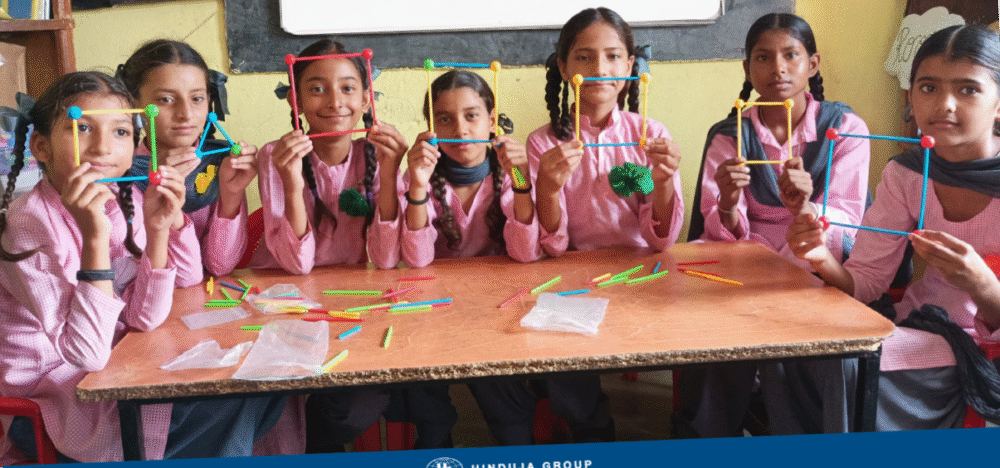
 Indian commercial vehicle giant Ashok Leyland said it is taking its CSR activities to next level and targeting to cover one million underprivileged children under its education and livelihood programmes.
Balachander N V, Director, Ashok Leyland Foundation said, “For over a decade, the company has maintained a strong commitment to Corporate Social Responsibility (CSR), contributing to sustainability, health and wellness, education, and community development.
In India, millions of children continue to face barriers to quality education due to poverty, migration, gender disparities, and disability.
Balachander along with his team was address a Virtual-cum-onsite media conference on Tuesday to explain about the company’s CSR programmes. Automotive Lead from Banaglore participated the media conference through virtual mode.
Programmes

He said the company has two programmes to address this issue. One is Road to School (RTS) and another is Road to Livlihood (RTL).
Launched in 2015, the RTS bridges learning gaps in government schools across underserved communities, addressing both scholastic achievement and the broader conditions that enable children to thrive.
Meanwhile the 2022 launched RTL programme builds on the RTS foundation to prepare older students for life beyond school. It equips them with practical skills in digital literacy, spoken English, financial literacy, career planning, and emotional wellness — enabling informed choices for higher education, vocational training, or employment.
What began in 2015 with 36 schools in Krishnagiri District, Tamil Nadu, has grown into one of India’s largest corporate-funded school education programmes. Today, the RTS and RTL programmes operate across 25 districts in 9 states, reaching over 6,26,000 students across 4,585 government schools in more than 4,500 villages. The programme serves students from Grades 2 to 12 through a comprehensive approach focused on improving access, learning outcomes, retention, and life opportunities.
The programme is implemented in collaboration with Samagra Shiksha Abhiyan and state governments across Tamil Nadu, Jammu & Kashmir, Rajasthan, Uttar Pradesh, Jharkhand, Andhra Pradesh, Meghalaya, Assam, and Maharashtra.
The programme’s outcomes are measured against standardised education indicators. RTS schools consistently outperform national averages across key metrics:
- 15,000+ students reintegrated into government schools
- 98% of students successfully transitioned to high school
- 279 School Management Committees contributed to school development
- 95% of RTS students completed Grade 10
- 25–30% improvement in literacy and numeracy outcomes
- ₹50+ crore worth of government welfare benefits unlocked
- 85% of Grade 12 students pursued higher education of choice
- 634 Grade 8 students qualified for the NMMS scholarship through the programme
- 20% improvement in school performance ratings
- Increased participation from parents, School Management Committees (SMCs), and local communities
The mission: to reach 1 million students, ensuring every child in India has access to quality education.
T Sasikumar, Chief Operating Officer of Ashok Leyland Foundation, said that both programmes operate alongside a broader community engagement model — including awareness initiatives, health camps, door-to-door outreach, and home and community visits. The goal is a more developed, informed community that actively supports the attendance and wellbeing of its children.
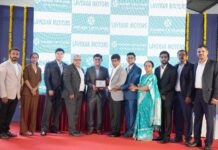
The Road to School programme has received recognition from government bodies and industry associations at both state and national levels:
Ashok Leyland Foundation’s work extends beyond classrooms into the sustainability and health of the communities it serves.
Rainwater harvesting ponds, roof systems, and community harvesting structures, watershed management and Spring shed management are a few to note.