
As India speeds up its transition to electric mobility, one of the clearest growth engines has emerged in the last-mile and fleet segments. Aggregators, rental companies, gig-economy delivery businesses, and micro-logistics operators are increasingly adopting electric two-wheelers (e-2Ws) for their cost, environmental, and operational advantages. Electric two-wheeler maker Enigma EV is gearing fast in catering to this sector. In an email interview , Anmol Bohhre, CEO & Co-Founder Enigma EV shares his insights about his company and industry with Jaishankar Jayaramiah, Editor, Automotive Lead,
Enigma EV has been in the market for over a decade. Looking back, what were the biggest turning points that shaped the brand’s journey?
It’s been a journey defined by a few critical inflection points. In 2019, we made a decisive pivot from three-wheelers to two-wheelers, which reshaped our entire business direction. Then in 2022, we launched three high-speed vehicles Ambier N8, GT 450 Pro, and Crink PRO which significantly strengthened our portfolio. Hitting ₹10 crore in revenue in 2023 was another milestone that validated our approach. More recently, in 2025, securing a ₹5 crore credit line from SBI gave us the financial momentum to scale further. That same year, we entered last-mile fleet operations and partnered with battery swap companies, marking our shift toward a more ecosystem-driven approach.
Also Read : The Climate Pledge launches JOULE project to drive electric vehicle adoption in India

When you started Enigma EV, what gap in the market were you trying to solve, and how has that gap evolved over the years?
From day one, our focus was on bridging the gap between what the market was offering and what customers actually needed. That philosophy still defines us. We’ve consistently worked toward delivering value-for-money products while improving them in a cost-effective manner. What has changed over the years is customer awareness especially in rural India. Today’s EV customer is far more informed, which has made it easier for companies like ours to deliver more targeted and relevant solutions.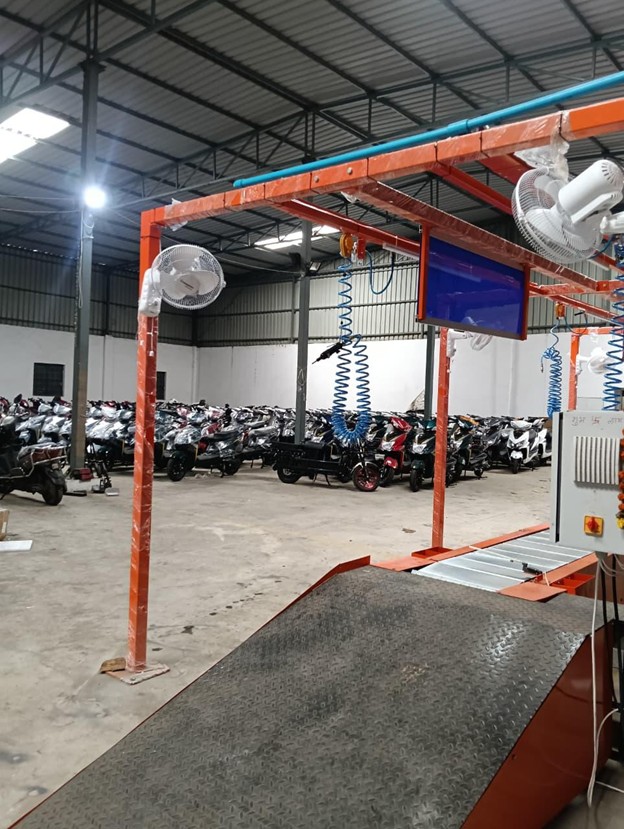
The EV space has become far more competitive in recent years. How has Enigma EV stayed relevant and built trust over time?
We entered the EV space early, alongside players like Okinawa and Hero Electric, at a time when EVs weren’t yet mainstream in India. What helped us stay relevant is a relentless focus on the customer, not just the product. We’ve always tried to understand the real challenges customers face while using EVs and address those pain points. Combined with our emphasis on quality and reliability, that approach has helped us build long-term trust.
What has been the most challenging phase in Enigma EV’s journey so far, and what did it teach you as a founder?
One of the toughest phases was in 2022, when we transitioned from low-speed to high-speed vehicles in one go. Our ambition was to build a portfolio of four high-speed vehicles under one umbrella something no one had done before. However, around the same time, regulatory changes like AIS-156 and subsequent phases were introduced. Since our products were already in the approval pipeline, the process had to restart, effectively doubling our timelines. This led to inventory challenges and impacted both sales and revenue. As a founder, it taught me that in a fast-evolving industry like EVs, some variables are simply beyond your control. Even with the right intent, policy shifts can create significant hurdles, especially for startups and MSMEs.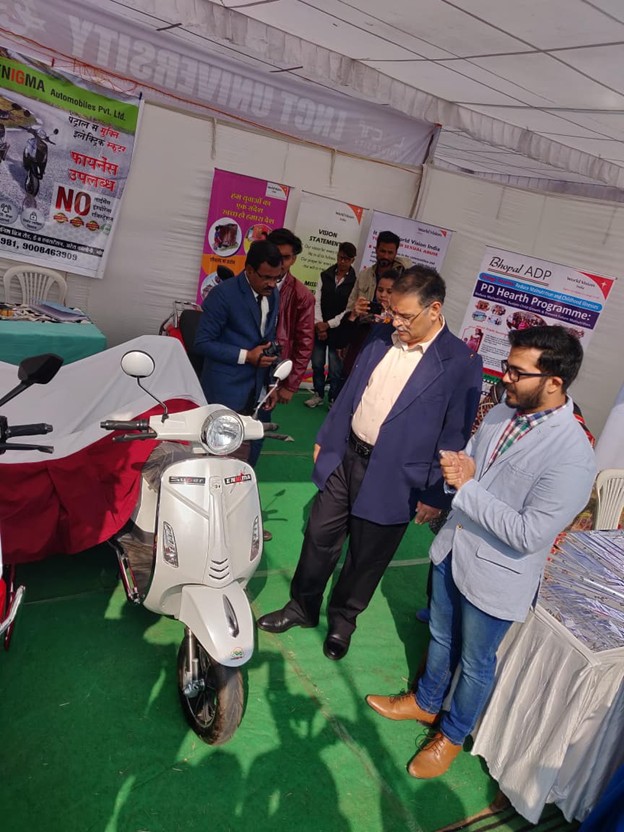
How have customer expectations evolved over the years, and how has Enigma EV adapted?
Earlier, the expectation was quite basic: customers just wanted the vehicle to run. Reliability, durability, and service weren’t as critical. Today, that mindset has completely changed. Customers now see EVs as the future and expect world-class performance, durability, and service. This shift has pushed us to evolve into a far more product-focused and customer-centric company.
What role has innovation played in Enigma EV’s growth, and how do you balance it with affordability and practicality?
Innovation has been at the core of our survival whether in design or technology. Our patent reflects that commitment. At the same time, affordability is something I deeply value. Even a ₹10 difference matters when you’re building for real-world customers. So for us, innovation cannot exist in isolation; it has to be practical, accessible, and aligned with the everyday needs of users.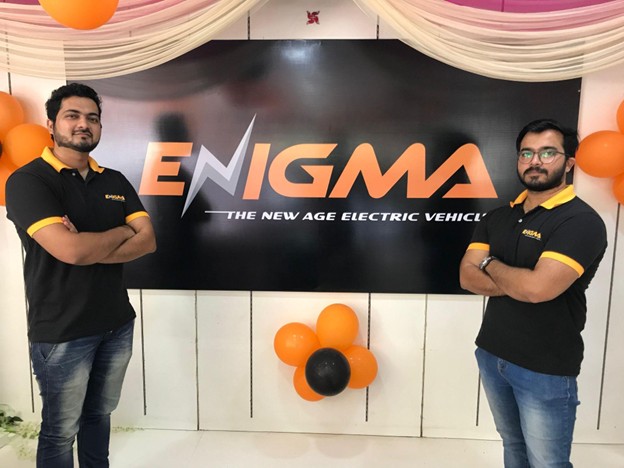
As the EV industry matures, what do you see as the next major shift in the market?
The next big shift will come from deeper adoption in tier 2 and tier 3 markets. We’ll also see industry consolidation, where unorganized and short-term players exit the space. The focus will increasingly move toward high-speed vehicles, supported by stronger regulations and improved charging infrastructure.
What are Enigma EV’s key expansion plans in terms of products, markets, and technology?
On the technology front, we’re currently working on a prototype that we believe could be a game-changer for the industry. It has the potential to fundamentally alter how battery usage is optimized. From a market perspective, our focus will remain on tier 2 and tier 3 cities, rural India, and gig workers, where we see significant untapped demand.
How do you see Enigma EV contributing to India’s electric mobility ecosystem over the next 5–10 years?
Our contribution will be rooted in building better products and delivering stronger customer service, while continuously expanding our reach. We want to play a meaningful role in making EV adoption more practical and reliable for a wider segment of India.
If you had to define the next chapter of Enigma EV in one line, what would it be?
India’s first fleet-focused OEM.